
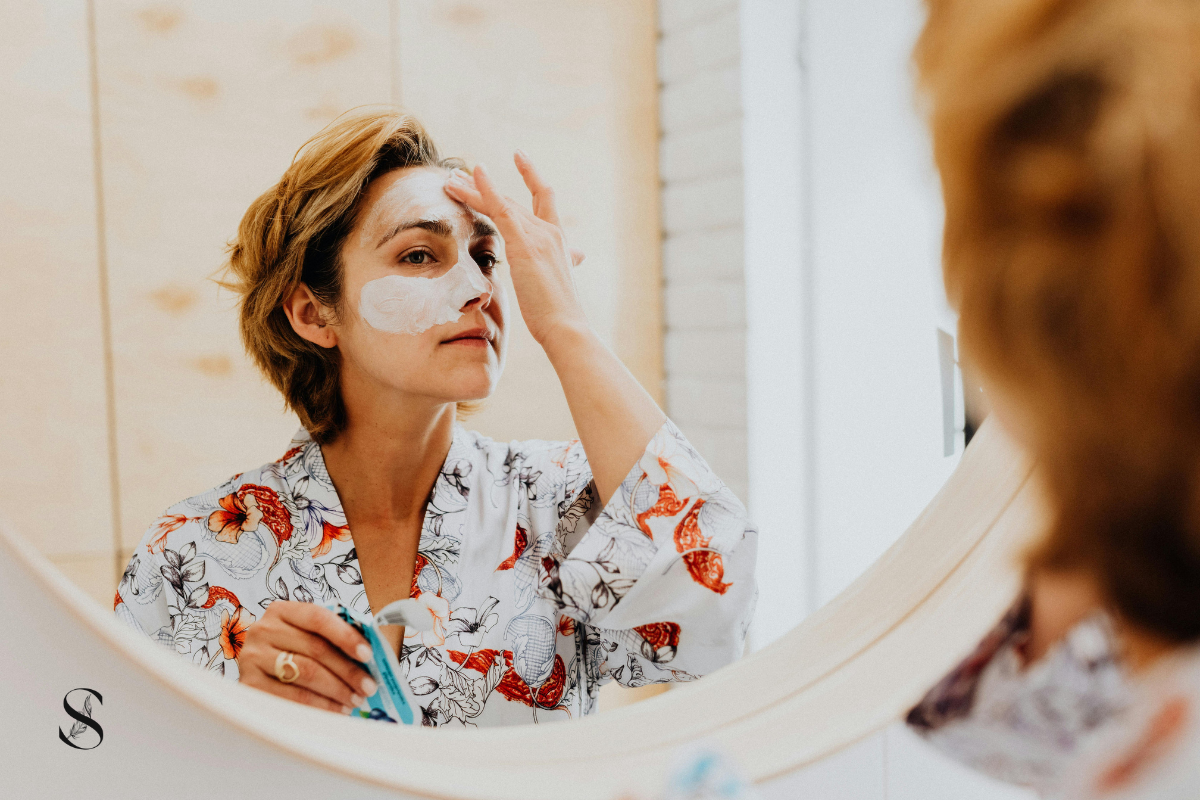
Tremella Mushroom Face Mask: Nature's Hyaluronic Acid for Glowing Skin
What if there was a face mask that could give you brighter, dewier, more radiant skin, without any of the redness, tightness, or irritation that seems to come with every product you try these days? Enter tremella mushroom, an ancient beauty secret that's finally getting the recognition it deserves. This isn't another ingredient making big promises it can't keep. Tremella mushroom is clinically proven to hydrate skin more effectively than hyaluronic acid, holding up to 500 times its weight in water while also supporting collagen production and calming inflammation. When combined with gentle clays and soothing botanicals in a powder mask, it delivers something your skin desperately needs right now: gentle renewal that actually NOURISHES instead of stripping. Here's why tremella mushroom is about to become your new obsession—and how to choose the best natural face mask for perimenopausal skin that leaves you glowing, not frustrated.
Have you discovered tremella mushroom yet?
If not, you're about to fall in love.
Also called "snow mushroom," tremella has been a beauty secret in Traditional Chinese Medicine for centuries and used specifically to maintain radiant, hydrated, youthful skin.
And modern science has finally caught up: tremella mushroom is clinically proven to be MORE effective than hyaluronic acid for deep, lasting hydration.
It holds up to 500 times its weight in water, penetrates deeper into your skin than HA, stimulates collagen production, and provides antioxidant protection, all while being incredibly gentle on sensitive skin.
For women in their 40s and beyond navigating hormonal skin changes, tremella mushroom is a game-changer.
Here's why this ancient ingredient is having a major moment in 2026 and how to find the best natural face mask for perimenopause that harnesses its power.
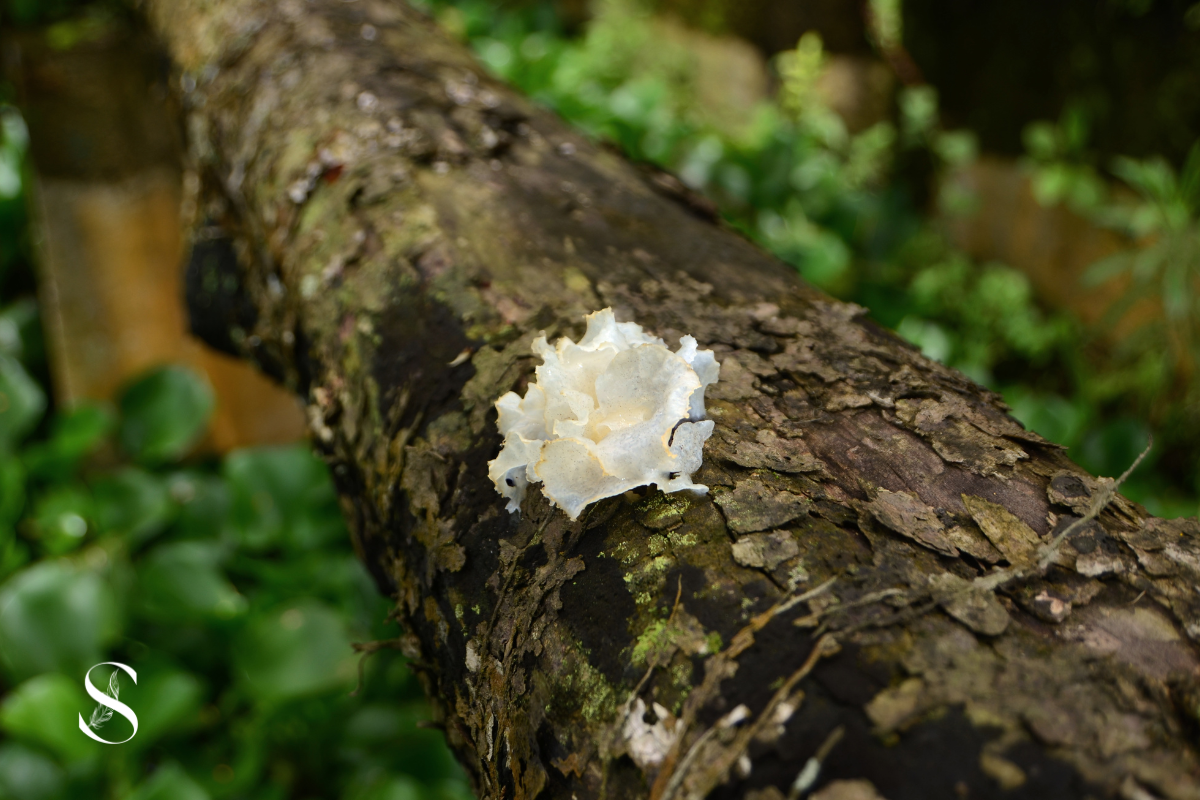
What Makes Tremella Mushroom So Special?
Let's start with the good stuff: what tremella actually DOES for your skin.
It's Nature's Hyaluronic Acid (But Better)
You've probably heard of hyaluronic acid and it's been a skincare superstar for years because it can hold up to 1,000 times its weight in water.
But here's what makes tremella different (and better):
Tremella holds up to 500 times its weight in water and because of its smaller molecular structure, it penetrates DEEPER into your skin and creates a more flexible, longer-lasting hydration film.
Clinical studies show tremella is 15% more effective than hyaluronic acid at hydrating skin.
It doesn't just sit on the surface. It actually gets IN there.
It Does More Than Just Hydrate
Unlike hyaluronic acid (which is basically just a moisture magnet), tremella mushroom is multitasking:
Stimulates collagen production (hello, firmness and elasticity)
Provides antioxidant protection (fights free radical damage and environmental stress)
Supports barrier function (strengthens your skin's protective layer)
Calms inflammation (reduces redness and reactivity)
This isn't just hydration. This is skin REPAIR.
It's Incredibly Gentle
Here's a fun fact: hyaluronic acid can sometimes backfire in low-humidity environments by pulling water OUT of your skin, leaving you drier than before.
Tremella doesn't have that problem.
It creates a protective hydration barrier that LOCKS moisture in, regardless of climate or season.
This makes it perfect for skin that's become more sensitive and reactive over time.
It's Completely Natural and Plant-Based
Most hyaluronic acid in skincare is synthetically produced through bacterial fermentation or historically, it was extracted from rooster combs.
Tremella is a pure mushroom extract. Clean, vegan, botanical.
No wonder it's been used for centuries in Eastern beauty rituals.
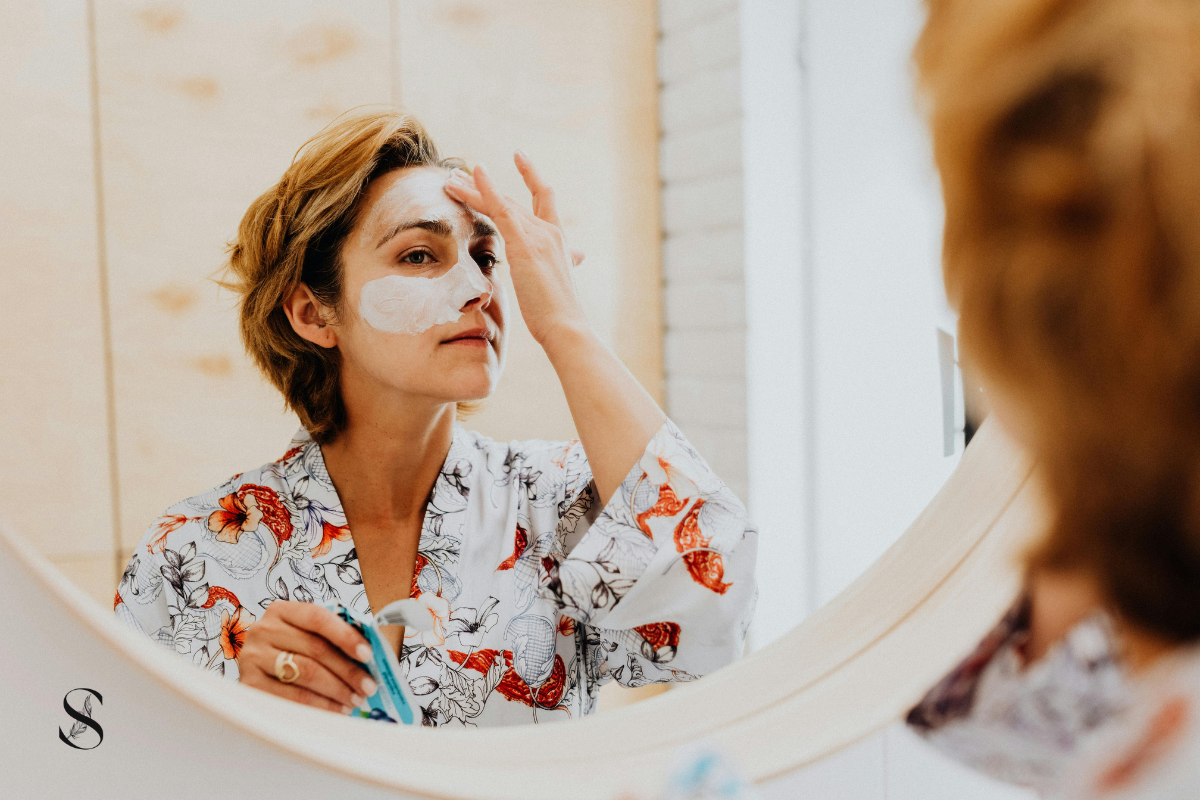
Why Tremella is Perfect for Skin in Your 40s and Beyond
If you've noticed your skin changing or getting drier, looking duller, reacting to products that never bothered you before, you're not imagining it.
Hormonal shifts during perimenopause affect your skin in very specific ways:
Your barrier gets thinner (you produce fewer natural oils and protective lipids)
Cell turnover slows down (dead skin sticks around longer, creating dullness)
You're chronically dry (your skin produces less natural hyaluronic acid)
You're more sensitive (weakened barrier = more reactive skin)
This is why your old skincare routine may not be getting you results or stopped working.
It's also why tremella mushroom is an ingredient that you should look at adding to your regimen.
It hydrates deeply (replacing what your skin isn't producing naturally anymore)
It renews gently (working WITH your slower cell turnover, not against it)
It strengthens your barrier (supporting your skin's natural protective layer)
It calms reactivity (anti-inflammatory, soothing, gentle)
Tremella was made for hormonal skin.
What to Look for in the Best Natural Face Mask for Perimenopause
Now that you know WHY tremella is amazing, let's talk about what else makes a face mask perfect for skin longevity.
The best natural face mask should do TWO things at once:
1. Gently exfoliate (to remove dullness and texture)
2. Deeply hydrate (to nourish and plump your skin)
Most masks make you choose. Exfoliating masks strip and irritate. Hydrating masks don't address texture.
But what if you could have BOTH?
Here's what to look for:
Gentle Clays (Not Harsh Drying Clays)
Look for:
White kaolin clay (the gentlest clay—detoxifies without stripping)
French pink clay (gently draws out impurities while being soothing)
Avoid:
Bentonite clay (too drying for delicate skin)
Charcoal (too stripping for a weakened barrier)
Tremella Mushroom (The Star Ingredient)
Look for:
Tremella fuciformis extract or powder
Listed high in the ingredient list (not just a trace amount)
Why it matters:
Holds 500x its weight in water
Penetrates deeper than HA
Collagen-boosting + antioxidant
Perfect for dry, sensitive skin
Calming, Anti-Inflammatory Botanicals
Look for:
Calendula (healing, anti-inflammatory, soothing)
Rose petal (calms redness, balances skin)
Marshmallow root (soothes irritation, softens skin)
Hibiscus (gentle natural vitamin C, brightening)
Avoid:
Synthetic fragrances (trigger sensitivity)
Strong essential oils (can irritate)
Harsh acids (glycolic, lactic in high concentrations)
Powder Formula (Activated Fresh)
Why powder is better:
You activate it fresh every time (no preservatives needed)
You control the consistency (thick for intense hydration, thin for gentle exfoliation)
Ingredients stay potent until you mix them
No fillers, no water weight just pure concentrated botanicals
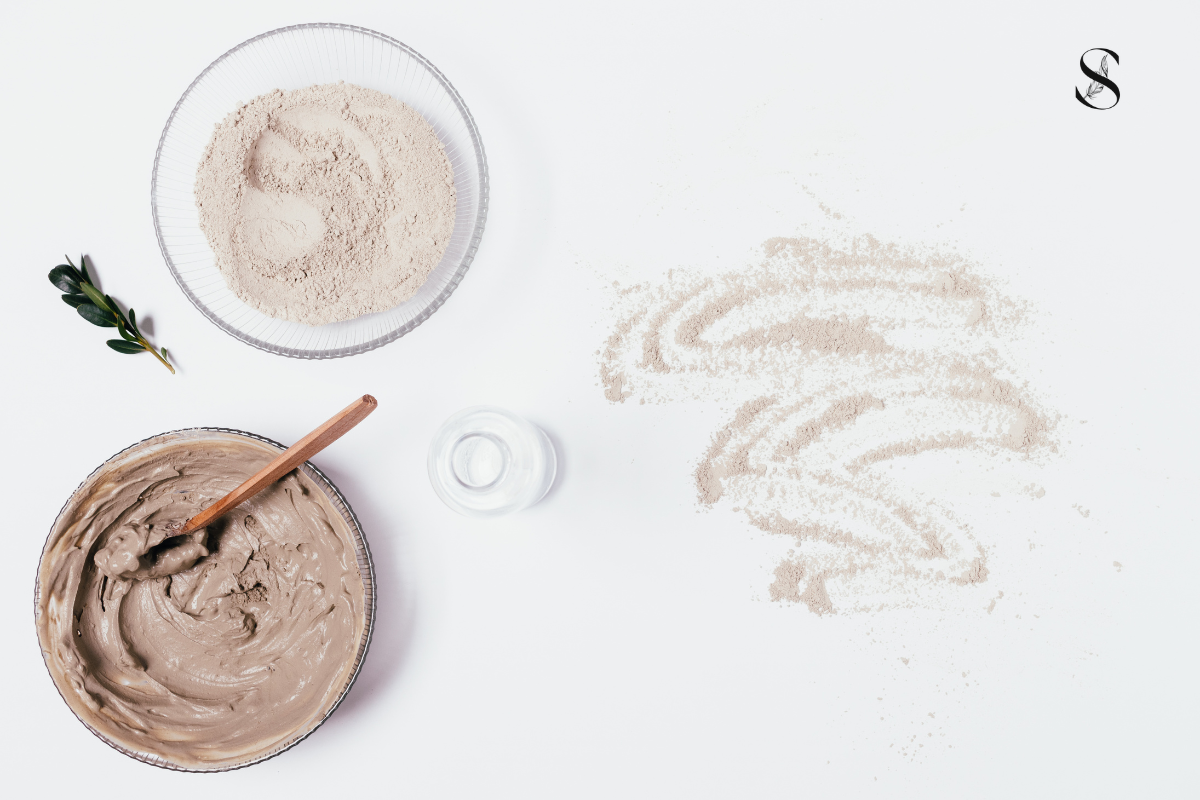
What the IDEAL Natural Face Mask Looks Like
Based on everything we know, here's the perfect formula:
GENTLE RENEWAL:
White kaolin clay + French pink clay (detoxify without stripping)
DEEP HYDRATION:
Tremella mushroom (nature's hyaluronic acid, 500x water retention, collagen-boosting, antioxidant protection)
SOOTHING BOTANICALS:
Marshmallow root (calms, softens)
Calendula (anti-inflammatory, healing)
Rose petal (balances, soothes)
Hibiscus (gentle brightening, vitamin C)
What this mask does:
While you wear it:
Gentle clays draw out impurities
Tremella floods your skin with hydration
Botanicals calm and soothe
When you rinse it off:
Your skin is BRIGHTER (renewed without irritation)
Your skin is SOFTER (botanical enzymes gently smoothed texture)
Your skin is HYDRATED (tremella penetrated deeply)
Your skin is CALM (no redness, no tightness, just glow)
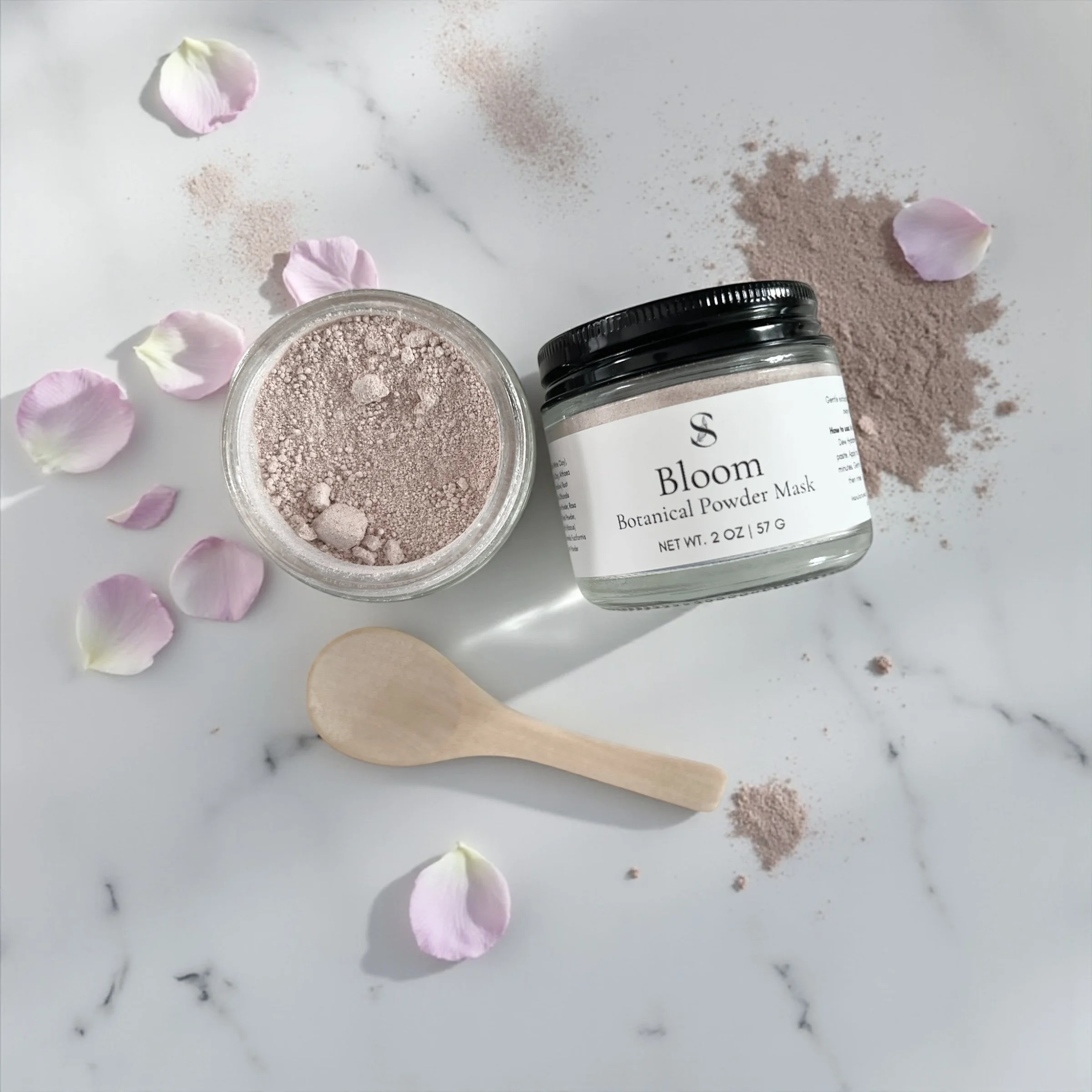
This is what Bloom does.
Bloom: Your New Favorite Mask Ritual
Bloom is a powder mask that you mix fresh with water (or a hydrating mist) to activate.
Here's what's inside:
White kaolin clay + French pink clay (gentle detoxification)
Tremella mushroom (deep hydration, collagen support, antioxidant protection)
Marshmallow root (soothing, softening)
Calendula powder (calming, healing)
Rose petal powder (balancing, anti-inflammatory)
Hibiscus powder (natural vitamin C, brightening)
7 pure botanical ingredients. Nothing else.
How to use it:
Mix 1-2 teaspoons of Bloom powder with water (or Dew hydrating mist for extra nourishment).
Apply to clean skin, avoiding the eye area.
Leave on for 10-15 minutes, your skin will feel cool and soothed, never tight.
Rinse with warm water.
Follow with your serum (Renew) and facial oil (Glow).
Use 1-2 times per week.
What you'll notice:
Immediately: Brighter, dewier, softer skin. No tightness, no redness, just a healthy glow.
After 4 weeks: Smoother texture, more even tone, visibly hydrated and plumper skin.
Why This Mask is Different
Most exfoliating masks: Strip your skin, cause redness, damage your barrier.
Bloom: Gently renews while NOURISHING with tremella mushroom.
Most hydrating masks: Sit on the surface, don't address dullness or texture.
Bloom: Tremella penetrates deeply while gentle clays renew the surface, both at once.
Most clay masks: Leave your skin tight, dry, uncomfortable.
Bloom: Tremella HYDRATES while the clays work. You get renewal + hydration simultaneously.
Most "natural" masks: Full of fillers, fragrances, synthetic ingredients.
Bloom: 7 pure botanicals. Vegan, clean, effective.
Common Questions About Tremella Mushroom Face Masks
Q: How is tremella mushroom different from hyaluronic acid?
A: Both hydrate, but tremella does MORE. It holds 500x its weight in water (comparable to HA's 1,000x), but tremella has a smaller molecular size so it penetrates deeper. Plus, tremella stimulates collagen, provides antioxidant protection, and is gentler on sensitive skin. Clinical studies show it's 15% more effective than HA at hydrating skin.
Q: Can I use this mask if my skin is very sensitive?
A: Yes! Tremella mushroom is incredibly gentle and anti-inflammatory. The clays in Bloom are the gentlest available (white kaolin, French pink clay), and the botanicals (calendula, rose, marshmallow root) are all calming and soothing. This mask is specifically formulated for sensitive, reactive skin.
Q: How often should I use a face mask?
A: 1-2 times per week is perfect. Once a week maintains glow and clarity. Twice a week if your skin is particularly dull or needs extra hydration.
Q: Can I mix the powder with something other than water?
A: Absolutely! Try:
Dew (hydrating mist) for extra hydration
Aloe vera gel for soothing
Honey for antibacterial benefits
Q: Will this help with dryness?
A: Yes! Tremella mushroom is one of the most effective natural hydrators available. It penetrates deeply and creates a lasting moisture barrier. Unlike some masks that hydrate temporarily, tremella's effects last.
Q: How long does a jar last?
A: If you use it once a week, a jar typically lasts 8-12 weeks. Powder formulas are concentrated, you only need 1-2 teaspoons per use.
The Ancient Secret Your Skin Has Been Waiting For
Tremella mushroom has been a beauty secret for centuries.
Now, science has proven what ancient practitioners already knew: it's one of the most effective natural hydrators on earth.
More effective than hyaluronic acid. Gentler on sensitive skin. Collagen-boosting, antioxidant-rich, barrier-supporting.
When you combine tremella with gentle clays and calming botanicals, you get something special: a face mask that renews your complexion while deeply nourishing it.
This is Bloom.
It's not harsh. It's not stripping. It's not discouraging.
It's gentle, effective, botanical renewal for skin that's needs hydration and gentle exfoliation.
Ready for Your Glow-Up?
Bloom Powder Mask gives you:
Deep hydration with tremella mushroom (nature's hyaluronic acid)
Gentle renewal with white kaolin + French pink clay
Calming botanicals (calendula, rose, marshmallow root, hibiscus)
7 pure ingredients. Nothing else.
Mix. Apply. Glow.
Shop: skinsoulrituals.com
Your skin is changing. That's not a problem to fix, it's a transition to support. And tremella mushroom knows exactly how to do that.
Why Your Skincare Stopped Working in Your 40s
If you've looked in the mirror lately wondering why your favorite moisturizer doesn't work anymore, why your serum just sits on top of your skin, or why your cleanser leaves you tight and stripped, you're not imagining it. Your skin has changed. In your 40s, perimenopause triggers rapid hormonal shifts that fundamentally alter your skin's structure and needs. The products that worked at 35 can't solve the problems your skin has at 45 because those problems are biologically different. You're losing collagen fast (30% in the first 5 years), your barrier is weaker, cell turnover has slowed, and you're producing less natural hydration. This isn't gradual aging, this is your hormones and the good news? There is a clear easy path to adjust your routine to meet your skin’s needs now.
By Amber Boone, Licensed Aesthetician & Founder of Skin Soul Rituals
If you've looked in the mirror lately and thought, "What happened? My moisturizer used to work. My serums used to make my skin glow. Now... nothing," you're not imagining it.
Your favorite products didn't suddenly become ineffective. Your skincare routine didn't fail you randomly.
Something changed. And that something is more than likely related to hormonal changes that come along with perimenopause.
What Happened? Why Did My Skincare Stop Working?
Here's what probably happened:
The cleanser that kept your skin balanced now leaves it tight and stripped.
The moisturizer that used to last all day now absorbs in an hour and your skin still feels dry.
The serum that gave you that glow? It sits on top of your skin and feels like its doing nothing.
The exfoliator that smoothed your texture now irritates and reddens your skin.
You've tried buying more expensive products. You've layered on extra hydration.
And nothing works the way it used to.
Here's the truth that the beauty industry doesn't want to talk about…
This Isn't Aging, This Is Hormonal
Most "anti-aging" skincare is not designed for this.
Your skin in your 40s isn't gradual aging and can sometimes feel like its changed overnight.
It's perimenopause. And perimenopause is hormonal, not chronological.
Here's what that means:
When you were in your 20s and 30s, estrogen was quietly doing a lot of heavy lifting for your skin:
Producing natural oils that kept your barrier strong
Stimulating collagen production to keep skin firm
Helping your skin retain water and stay plump
Supporting cell turnover to keep skin smooth and bright
Regulating oil production to keep skin balanced
Then, somewhere in your late 30s or early 40s, estrogen levels start to fluctuate and decline. Not gradually. Erratically.
Some days high, some days low, all over the place, until eventually, they settle at much lower levels than before.
And when estrogen drops, all those functions it was quietly handling? They drop too.
The 4 Skin Changes That Make Your Products Stop Working
I’m breaking down exactly what's happening and why the products that used to work don't anymore.
Change #1: Your Skin Barrier Is Weaker (Why Your Moisturizer Doesn't Work Anymore)
Think of your skin barrier like a brick wall. The "bricks" are skin cells, and the "mortar" holding them together is made of natural oils (lipids, ceramides, cholesterol).
Estrogen helps your skin produce that mortar.
When estrogen drops, your skin produces less of it. The mortar weakens. The wall develops gaps.
This is why:
Your moisturizer absorbs quickly but your skin feels dry an hour later (the moisture is escaping through the gaps)
Products that never bothered you now sting or burn (irritants are getting through the weak barrier)
Your skin feels sensitive to everything, the weather, fabrics, ingredients (your barrier can't protect you like it used to)
What your old routine was doing: Sitting on top of a strong barrier, adding a little extra hydration.
What your skin needs now: Barrier repair. Not just hydration but actual lipid replenishment to rebuild that mortar.
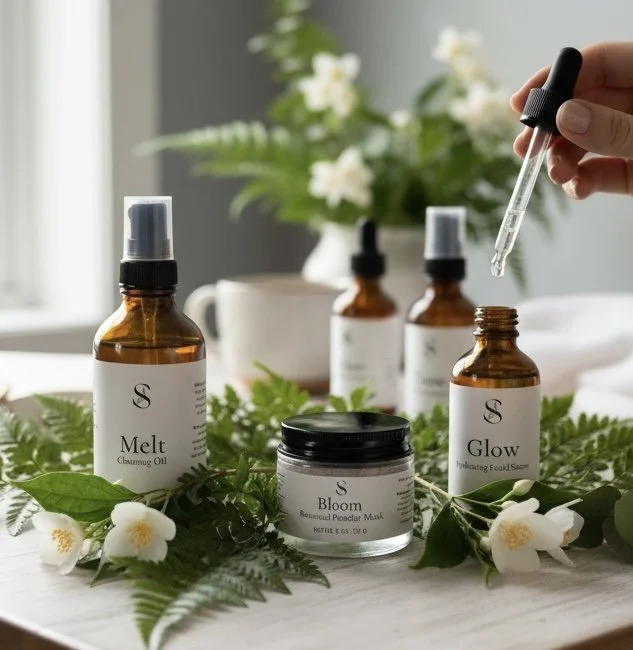
What works: Oil-based cleansers that don't strip your barrier (like Melt), hydrating mists that prep skin (like Dew), and nourishing facial oils that replace lost lipids (like Glow).
Change #2: You're Losing Collagen Fast (Why Your Serums Don't Firm Anymore)
Here's the number that matters:
In the first 5 years of perimenopause and menopause, women lose approximately 30% of their skin's collagen.
Not 30% over your lifetime. 30% in 5 years.
After that, you continue losing about 2% per year.
This is rapid structural change. Not simply gradual aging.
This is why:
Fine lines that used to appear only when you smiled are now visible all the time
Your skin feels thinner, more fragile, less resilient
Firmness is disappearing and jowls appear, skin starts to sag
Your "anti-aging" serum that worked at 35 barely makes a dent now
What your old routine was doing: Maintaining collagen levels that were naturally strong.
What your skin needs now: Collagen stimulation, but gentle stimulation that won't damage your weakened barrier.
What works: Bakuchiol (the gentle retinol alternative that stimulates collagen without irritation, like in Renew) paired with barrier-supporting oils, not harsh retinol that strips your already-fragile skin.
Change #3: Your Cell Turnover Has Slowed Way Down (Why Exfoliators Don't Brighten Anymore)
When you were younger, your skin renewed itself about every 28 days.
In your 40s and beyond, that can stretch to 40-60 days and sometimes longer.
Dead skin cells stick around longer. New, fresh cells take longer to reach the surface.
This is why:
Your skin looks dull, even when you moisturize
Texture feels rough or uneven
Products seem to sit on top of your skin instead of absorbing
Your old exfoliator (that used to reveal glowing skin) now just irritates without results
What your old routine was doing: Speeding up a naturally fast process.
What your skin needs now: Gentle enzymatic exfoliation that works WITH your slower turnover, not harsh scrubs or acids that damage your barrier.
What works: Clay and botanical-based masks with natural enzymes (like Bloom's blend of marshmallow root, calendula, rose, hibiscus, and gentle clays) plus tremella mushroom for deep hydration while you exfoliate.
Change #4: You're Producing Less Natural Hydration (Why Everything Feels Dry)
Estrogen helps your skin produce hyaluronic acid naturally. The molecule that holds up to 1,000 times its weight in water.
When estrogen drops, your skin produces less of it.
You're also producing fewer natural oils (sebum), which means your skin can't seal in the hydration it does get.
This is why:
Your skin feels chronically dry no matter how much moisturizer you apply
You wake up with dry, flaky patches that never used to be there
Makeup doesn't sit right, it emphasizes texture and dryness
You're constantly reaching for lip balm, hand cream, body lotion
What your old routine was doing: Adding a little extra moisture to skin that was already well-hydrated.
What your skin needs now: Deep hydration PLUS a way to seal it in (because your skin can't do it on its own anymore).
What works: Layering water-based hydration (like Dew's rose hydrosol, aloe, and glycerin) with oil to lock it in (like Glow's calendula-rose infused jojoba and rosehip). Tremella mushroom (nature's hyaluronic acid) also helps, it holds up to 500x its weight in water and is in Bloom.
Why the "Just Use Stronger Actives" Advice Makes It Worse
Here's what probably happened when you noticed your skin changing:
You went to a dermatologist, or read an article, or asked for advice and someone told you:
"Use stronger actives. More retinol. More acids. Exfoliate more. Fight the aging harder."
So you did. And your skin got worse.
Redder. Drier. More irritated. More sensitive.
You thought, "Maybe I need to push through? Maybe my skin needs to adjust?"
But it didn't adjust. It just got more reactive.
Here's why that advice fails perimenopausal skin:
Those "anti-aging" actives were designed for skin with a strong barrier.
Your barrier is now thinner, weaker, and more fragile.
Harsh retinol, glycolic acid, strong exfoliants, they strip your barrier further.
They damage the very thing your skin is desperately trying to protect.
You don't need stronger products. You need different products.
Products that work WITH your changing skin, not against it.
Products that rebuild your barrier while gently supporting collagen.
Products that hydrate deeply AND seal that hydration in.
Products made for hormonal skin changes that meet you where you are now. A simple, effective botanical routine.
What Your Skin Actually Needs Now
If your skincare stopped working, it's not because you need to try harder.
It's because your skin's needs have fundamentally changed.
Here's what works now:
1. Gentle, Oil-Based Cleansing
Your weakened barrier can't handle harsh, foaming cleansers anymore.
You need oil-based cleansers that:
Remove makeup and sunscreen without stripping your natural oils
Emulsify with water (so they rinse clean without residue)
Nourish your skin while cleansing
What this looks like: Melt, an oil cleanser with macadamia nut oil, meadowfoam seed oil, sunflower seed oil, and vitamin E. It melts away makeup and impurities, then emulsifies into a milky texture that rinses clean—all while nourishing your barrier, not stripping it.
Why it works: Oil dissolves oil. You're balancing your skin, not fighting it.
2. Hydration That Actually Stays (Not Just Surface Moisture)
Your skin can't hold onto water like it used to.
You need:
Water-based hydration to plump skin
A way to seal that hydration in (because your skin doesn't produce enough oil to do it naturally)
What this looks like:
Step 1: Dew, a hydrating mist with rose hydrosol, aloe, and vegetable glycerin. It delivers botanical hydration that preps your skin to receive treatment products.
Step 2: Glow, a nourishing facial oil with jojoba (infused with calendula and rose), rosehip, and vitamin E. It seals in all that hydration and replaces the lipids your skin isn't producing anymore.
Why it works: You're layering water and oil—the way your skin used to do naturally before estrogen declined.
3. Gentle Collagen Stimulation
You're losing collagen fast. You DO need to stimulate collagen production.
But you need to do it WITHOUT damaging your fragile barrier.
You need:
Bakuchiol (the gentle retinol alternative that stimulates collagen without irritation)
Nourishing oils that support your barrier while the bakuchiol works
What this looks like: Renew, a bakuchiol serum with 1% bakuchiol in a base of squalane, jojoba, rosehip, macadamia nut, meadowfoam, and sea buckthorn oils. Plus vitamin E, frankincense, and jasmine.
Why it works: Bakuchiol delivers the collagen-boosting benefits of retinol without the peeling, redness, or irritation. It works WITH your barrier, not against it.
4. Gentle Exfoliation + Deep Hydration
Dead skin cells are sticking around longer. You need exfoliation.
But harsh scrubs and strong acids will damage your barrier.
You need:
Gentle clay-based exfoliation that detoxifies without stripping
Botanical enzymes that dissolve dead skin cells (not scrub them off)
Deep hydration AT THE SAME TIME (because your skin is dry!)
What this looks like: Bloom, a powder mask you mix with water. It contains:
White kaolin clay and French pink clay (gentle detoxification)
Marshmallow root, calendula, rose petal, and hibiscus (calming botanicals)
Tremella mushroom (nature's hyaluronic acid—holds up to 500x its weight in water!)
Why it works: You're exfoliating gently while flooding your skin with hydration. You're renewing AND nourishing at the same time.
The Simple 3-Step Routine w/weekly exfoliation 1/2 x’s
The Simple Routine That Actually Works for Perimenopausal Skin
If your tired of guessing what will work for your skin. Here's the routine:
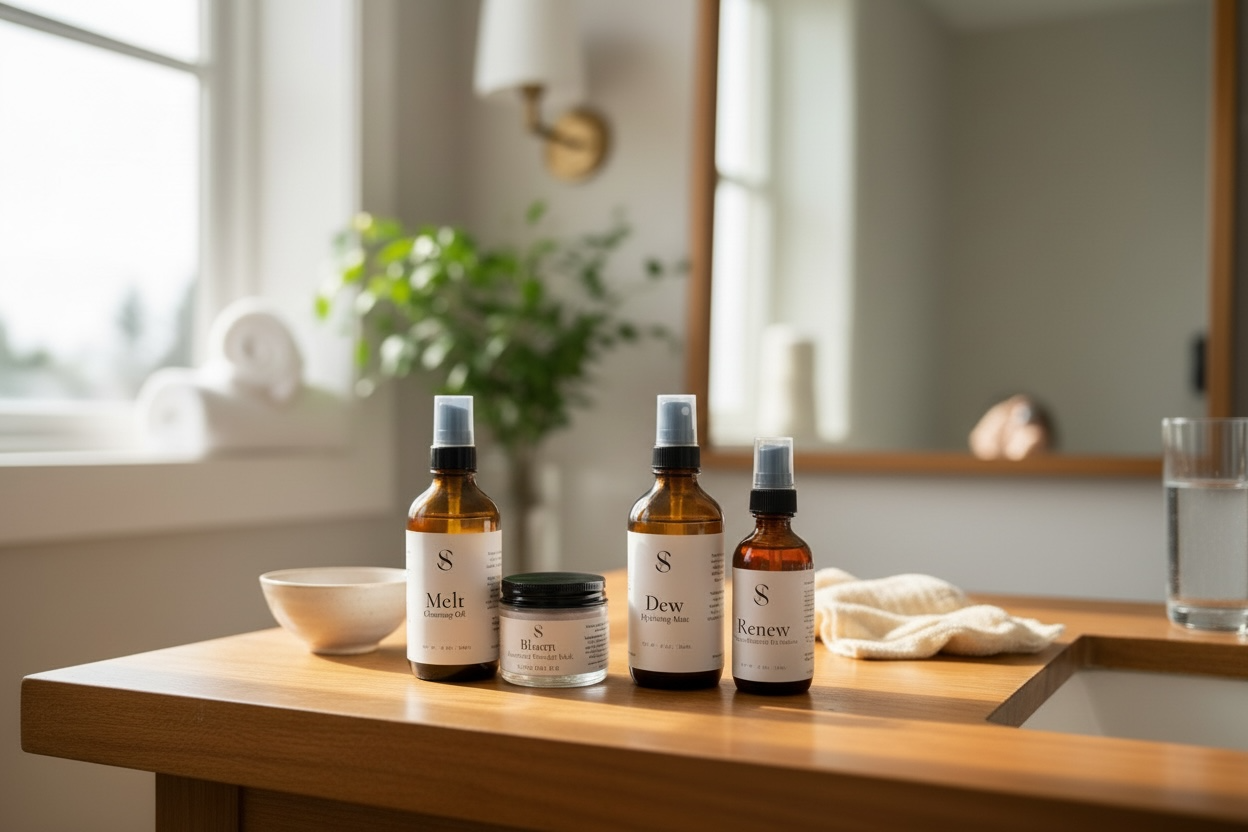
MORNING:
Cleanse: Melt (oil cleanser—nourishes while cleansing)
Hydrate: Dew (rose hydrosol mist—preps and plumps)
Treat: Renew (bakuchiol serum—gentle collagen boost)
Seal: Glow (facial oil—locks in hydration, replaces lipids)
Protect: SPF 30+ (mineral sunscreen is gentler)
EVENING:
Same routine (skip the SPF)
WEEKLY (1-2x):
Bloom powder mask (gentle exfoliation + deep hydration with tremella mushroom)
That's it.
No 10-step routine. No harsh actives. No fighting your skin.
Just simple, effective support for what your skin actually needs now.
If You Have Very Sensitive Skin
If your skin has become highly reactive during perimenopause, start even simpler:
Melt, Dew & Calm: Melt, a barrier repair oil cleanser, Dew, a hydrating mist that will soothe irritation (only 4 ingredients) and Calm a soothing serum to calm and heal with only 2 ingredients designed for inflammation and redness.
Perimenopause can make skin incredibly sensitive. Sometimes you need to strip it all back and start with the absolute gentlest option.
Common Questions About Perimenopause Skincare
Q: How do I know if my skin changes are perimenopause or just aging?
A: If you're in your 40s and you've noticed sudden changes such as dryness that appeared seemingly overnight, products that used to work suddenly don't, increased sensitivity, texture changes, that's perimenopause.
Gradual aging happens slowly over decades. Perimenopause skin changes happen in a few years (sometimes months). The speed of change is the giveaway.
Q: Will my skin ever feel "normal" again?
A: Your skin will adapt and stabilize after menopause (when hormone levels settle at a new baseline). But "normal" means something different now.
With the right support, and products made FOR hormonal skin, your skin can feel comfortable, hydrated, and healthy again. Just not in the same way it did at 30. But that’s okay. We want to look our best not necessarily younger.
Q: Can I still use retinol?
A: If your barrier is strong and you've been using retinol for years with no issues, you might be able to continue, but watch for increased sensitivity.
If you're new to retinol or your skin has become sensitive, bakuchiol is the better choice. It stimulates collagen without the irritation, peeling, or barrier damage that retinol causes. It’s my new favorite.
Q: How long until I see results?
A: Barrier repair: 1-2 weeks (skin will feel more comfortable, less tight)
Hydration improvement: 2-3 weeks (plumper, dewier skin)
Collagen stimulation: 4-6 weeks (smoother texture, improved firmness)
Give your skin time. It took months for these changes to develop. Healing takes time too.
Q: Do I really need oil if my skin is oily?
A: Yes. Even if your skin is oily, it's likely dehydrated during perimenopause.
Your skin might be overproducing oil to compensate for the weak barrier and lack of moisture. Adding the right oil (like jojoba, which mimics your skin's natural sebum) can actually balance oil production. Trust me on this one. I know it seem contradicting.
Q: What about diet, sleep, and lifestyle?
A: Absolutely crucial. Your skin is an organ, and it responds to how you care for your whole body.
Sleep: Skin repairs itself at night. 7-8 hours minimum.
Hydration: Drink half your body weight in ounces of water daily.
Stress: Cortisol breaks down collagen. Manage stress actively.
Nutrition: Omega-3s, antioxidants, collagen-building foods matter.
Movement: Circulation = glow. Even 20-minute walks help.
Skincare can't fix internal dehydration, chronic stress, or poor sleep. So make sure your also supporting your skin from the inside out.
The Bottom Line
If your skincare stopped working in your 40s, you didn't do anything wrong.
You're not "bad at skincare."
Your skin changed. Biologically. Structurally. At a cellular level.
The products that worked at 35 can't solve the problems your skin has at 45, because those problems are fundamentally different.
You don't need to fight your skin. You need to support it.
You don't need "anti-aging” skincare. You need perimenopause-specific skincare.
You don't need 10 steps and harsh actives. You need simple, gentle, targeted support:
Barrier repair (oil cleansing, lipid replenishment)
Deep hydration (water + oil layering)
Gentle collagen stimulation (like bakuchiol, sea buckthorn)
Gentle exfoliation + hydration (clay and botanicals with tremella)
Want to hear me walk through this in person? I made a whole video on this exact topic, come hang out:
Ready to Give Your Skin What It Actually Needs?
I created The Skin Reset Collection and it gives you everything you need for perimenopausal skin:
Melt (oil cleanser—nourishes while cleansing)
Dew (hydrating mist—preps and plumps)
Renew (bakuchiol serum—gentle collagen boost)
Bloom (powder mask with tremella—gentle renewal + deep hydration)
Add Glow & Lift Kit (facial oil + gua sha tool) for the final step that promotes circulation and seals in all that hydration and replaces lost lipids.
If your skin is highly sensitive, start with Calm (two-ingredient serum that soothes with just calendula + jojoba).
Shop:skinsoulrituals.com
Subscribe on YouTube:@skinsoulrituals
Sign up to get new blog posts delivered to your inbox: https://skinsoulrituals.myflodesk.com/blog
With Gratitude & Good Skin Days,
Amber, Licensed Holistic Aesthetician (13+ years)
Skin Soul Rituals