
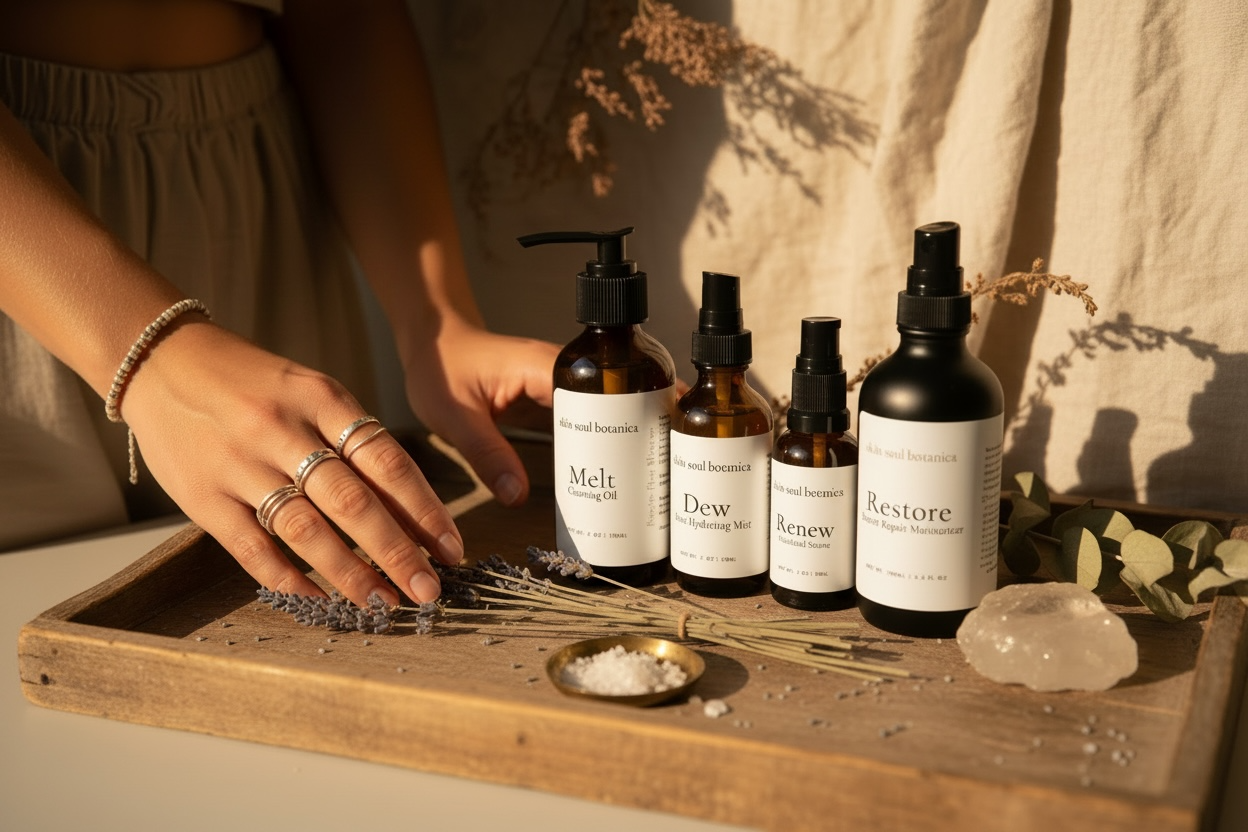
Best Facial Oil for Skin Barrier Repair: The Complete Guide
If your skin feels tight, looks red, or reacts to products that never bothered you before, your skin barrier is probably compromised. And here's what almost nobody tells you: the fastest way to repair it isn't with a heavy cream or a fancy serum. It's with the right oils—used the right way. Your skin barrier is literally made of lipids (oils, ceramides, fatty acids), so when it's damaged, you need to replace those lipids. But not all oils are created equal. Some just sit on top of your skin. Others actually integrate into your barrier and rebuild it from within. And the real secret? It starts with HOW you cleanse. Oil cleansing protects your barrier while you wash your face. Treatment oils rebuild it after. Together, they create the perfect one-two punch for barrier repair. Here's everything you need to know about using facial oils to heal your skin barrier—including the clinical research that proves it works.
by Amber Boone, Licensed Aesthetician
Have you tried an oil cleanser? It’s become my favorite way to cleanse but it wasn’t always. I used to be afraid they would break me out or simply just not do a good job of cleansing. An oil cleanser has been the best thing for my skin and I’m going to tell you why it may be for your skin too.
If you’ve noticed your face being tight after you wash it. Or red for no reason. Or it stings when you apply products that never used to bother you.
You've probably tried switching moisturizers, adding a serum, layering more hydration. But nothing seems to help.
Here's what's likely happening: your skin barrier is compromised. And here's the good news: the fastest, most effective way to repair it is simpler than you think.
It's oil.
Not a heavy cream. Not a fancy serum. Not a 10-step routine.
The right oils, used the right way, can rebuild your skin barrier in 2-4 weeks.
Let me explain why and show you exactly which oils actually work (backed by clinical research).
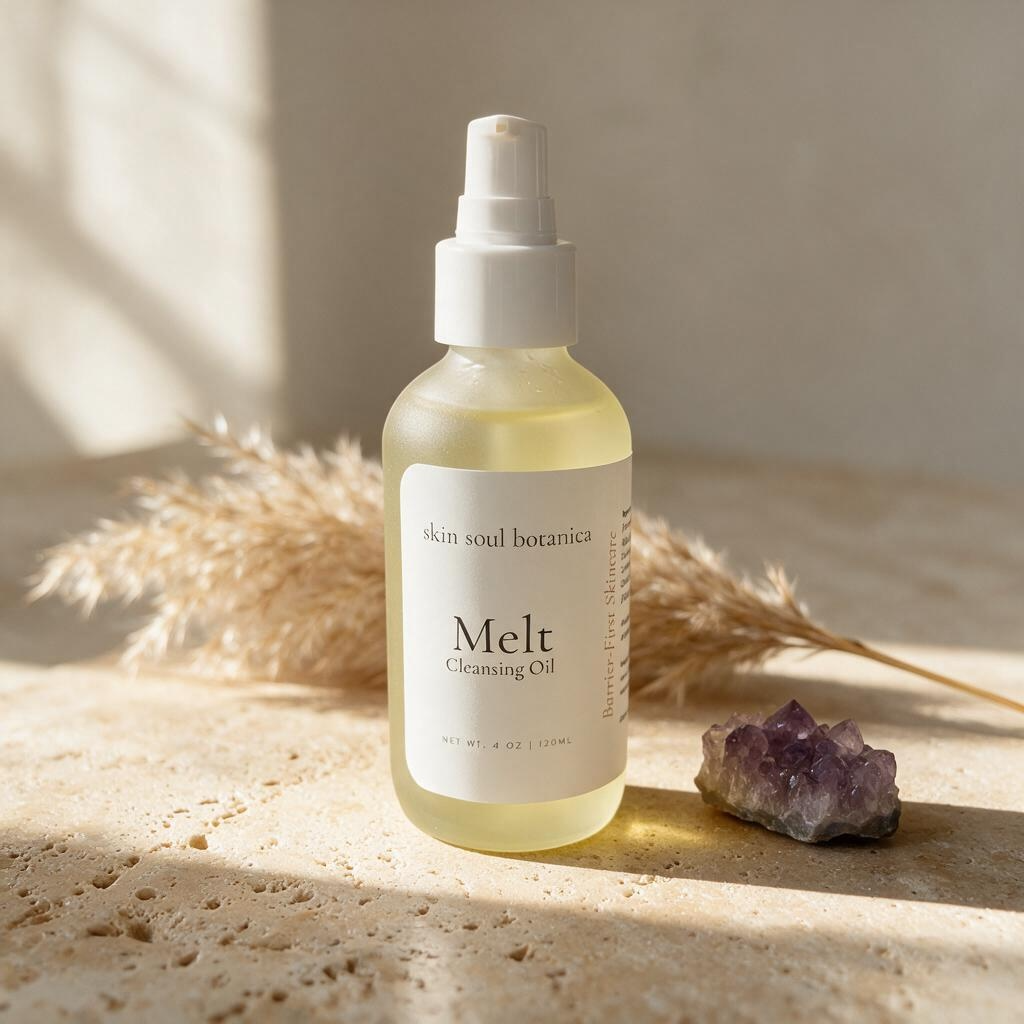
This is your go to cleanser if you want to repair your skin without stripping your skin barrier.
Why an oil cleanser? Because its so good at dissolving dirt, oil, makeup and SPF. Its effective but so gentle on the eyes too. Your eye makeup can easily be taken off without pulling or tugging on the eyes. The meadowfoam oil helps to control sebum production which helps to keep you from breaking out. It rinses clean so it leaves your skin feeling soft, not oily or greasy because of the natural emulsifier it has in it. If you’ve been on the fence about an oil cleanser, you have to try this one!
What Your Skin Barrier Actually Is (And Why It Matters)
Your skin barrier is the outermost layer of your skin, the stratum corneum.
Think of it like a brick wall:
The "bricks" are dead skin cells (corneocytes)
The "mortar" holding them together is made of lipids (ceramides, cholesterol, and fatty acids)
When this structure is intact, it does two critical things:
1. Keeps moisture IN (prevents transepidermal water loss—TEWL)
2. Keeps irritants OUT (protects against pollution, bacteria, harsh ingredients)
But when the lipid layer gets damaged from harsh cleansers, over-exfoliation, weather, stress, hormonal changes—the "mortar" starts to crumble.
Moisture escapes. Irritants get in. Your skin becomes:
Chronically dry (no matter how much moisturizer you use)
Sensitive and reactive (products sting, skin turns red easily)
Dull and rough (flaky patches, uneven texture)
Prone to breakouts (weak barrier = bacteria gets in)
This is barrier damage.
And the solution? Replace the lipids.
Why Facial Oils Are the BEST Solution for Barrier Repair
Here's what makes facial oils so effective for barrier repair:
They mimic your skin's natural lipid structure.
Unlike water-based moisturizers (which just add hydration), oils actually integrate into your barrier and strengthen it from within.
Clinical research published in Lipids in Health and Disease found that topical application of plant oils rich in essential fatty acids significantly improved barrier function by reducing transepidermal water loss (TEWL) and increasing skin hydration.
Another study in the Journal of Clinical and Aesthetic Dermatology showed that oils containing omega-6 and omega-9 fatty acids helped restore the lipid matrix in compromised skin barriers.
Translation: The right oils don't just sit on top of your skin. They actually rebuild the barrier at a structural level.
But here's the catch: not all oils work the same way.
And the secret to barrier repair isn't just WHICH oil you use, it's HOW you use it.
The Barrier Repair Strategy Nobody Talks About: It Starts With Cleansing
Here's where most people get barrier repair wrong:
They focus on what they PUT ON their skin (serums, creams, oils) but ignore what they're TAKING OFF (cleanser).
Harsh cleansers are the #1 cause of barrier damage.
Foaming cleansers with sulfates (SLS, SLES) strip your skin's natural lipids every single time you wash your face.
A study in the Journal of Dermatological Science found that surfactant-based cleansers significantly increased TEWL and reduced ceramide levels in the stratum corneum, they damaged the barrier.
So if you're trying to repair your barrier with oils but you're still using a stripping cleanser, you're taking one step forward and two steps back.
The solution? Oil cleansing.
Oil Cleansing: The Barrier-Protective Way to Wash Your Face
Oil cleansing works on a simple principle: like dissolves like.
Oil-based cleansers dissolve oil-based impurities (makeup, sunscreen, sebum, pollution) without stripping your skin's natural lipids.
A study published in Health on World found that oil-based cleansers removed up to 85% of sebum-based impurities compared to only 45% with water-based cleansers alone, while causing significantly less barrier disruption.
What makes a good oil cleanser for barrier repair:
✅ Emulsifies with water (rinses clean without leaving residue)
✅ Rich in nourishing oils (sunflower, macadamia, meadowfoam, jojoba)
✅ No sulfates or harsh surfactants (gentle emulsifiers only)
✅ Contains vitamin E (antioxidant protection while cleansing)
When you cleanse with oil instead of stripping foam:
You remove impurities WITHOUT removing your natural lipids
You actually NOURISH your barrier while you cleanse
Your skin feels soft and comfortable, never tight or squeaky
This is the first step in barrier repair: stop damaging it every time you wash your face.
The Best Oils for Cleansing Without Barrier Damage
Not all cleansing oils are created equal. Here's what to look for:
Sunflower Seed Oil
Why it works: High in linoleic acid (omega-6 fatty acid)
Research published in Pediatric Dermatology found that sunflower seed oil with high linoleic acid content (>60%) significantly improved skin barrier function and reduced transepidermal water loss.
Macadamia Ternifolia Seed Oil
Why it works: High in palmitoleic acid (omega-7)
Your skin naturally contains palmitoleic acid, but levels decline with age and barrier damage. Topical application helps restore this critical fatty acid.
Meadowfoam Seed Oil
Why it works: Creates a moisture-locking barrier
This oil has exceptional stability and forms a protective layer that prevents water loss while still allowing skin to breathe.
Fractionated Coconut Oil
Why it works: Lightweight, non-comedogenic
Unlike regular coconut oil (which can clog pores), fractionated coconut oil stays liquid and rinses cleanly while providing barrier support.
This is what oil cleansing should feel like:
Massage it onto dry skin. It melts away everything your skin doesn't need (makeup, sunscreen, pollution).
Add water. It emulsifies into a milky texture.
Rinse. Your skin feels clean, soft, balanced, never too tight.
You've just cleansed WITHOUT damaging your barrier. Now let's rebuild it.
The Best Treatment Oils for Actually REBUILDING Your Barrier
After you cleanse (gently, with oil), your skin is primed to receive treatment.
This is where you layer oils that don't just protect your barrier, they actively rebuild it.
What to look for in a barrier-repairing facial oil:
1. Omega-Rich Fatty Acids (The Lipid Replacements)
Your barrier needs omega-3, omega-6, omega-7, and omega-9 fatty acids to function properly.
The best oils for this:
Rosehip oil - Rich in omega-3 and omega-6, supports barrier repair and reduces inflammation
Jojoba oil - Closest to your skin's natural sebum, balances oil production, anti-inflammatory
Squalane - Mimics your natural sebum, lightweight, absorbs quickly, strengthens barrier
Macadamia nut oil - High in palmitoleic acid (omega-7), deeply nourishing
Sea buckthorn oil - Packed with omega-7, vitamin E, antioxidants
Meadowfoam seed oil - Prevents transepidermal water loss
2. Ceramides or Ceramide-Supporting Ingredients
Ceramides make up 40-50% of your skin barrier lipids.
When ceramide levels drop, barrier function declines.
Research in the Journal of Clinical and Aesthetic Dermatology found that topical ceramides restored barrier function, reduced dryness, and improved skin sensitivity.
While pure ceramide oils are rare, bakuchiol has been shown to support ceramide production.
A study in the British Journal of Dermatology found that bakuchiol increased ceramide synthesis in skin cells, helping to rebuild the barrier from within.
3. Antioxidant Protection (Prevents Further Damage)
Vitamin E is essential for barrier repair—it protects lipids from oxidative damage and supports barrier integrity.
4. Anti-Inflammatory Botanicals (Calms Reactivity)
Frankincense and jasmine both have anti-inflammatory properties that help reduce redness and support skin healing.
The Best Facial Oil for Skin Barrier Repair: What It Looks Like
Based on the clinical research, here's the IDEAL barrier-repairing facial oil:
OMEGA-RICH OILS:
Squalane (mimics natural sebum)
Jojoba (balances, anti-inflammatory)
Rosehip (omega-3 & 6, barrier repair)
Macadamia nut (omega-7, deeply nourishing)
Meadowfoam (prevents water loss)
Sea buckthorn (omega-7, regenerating)
BARRIER-SUPPORTING ACTIVES:
Bakuchiol (supports ceramide production, gentle renewal)
Vitamin E (antioxidant protection)
ANTI-INFLAMMATORY BOTANICALS:
Frankincense (calms, supports repair)
Jasmine (soothing)
This is exactly what Renew is.
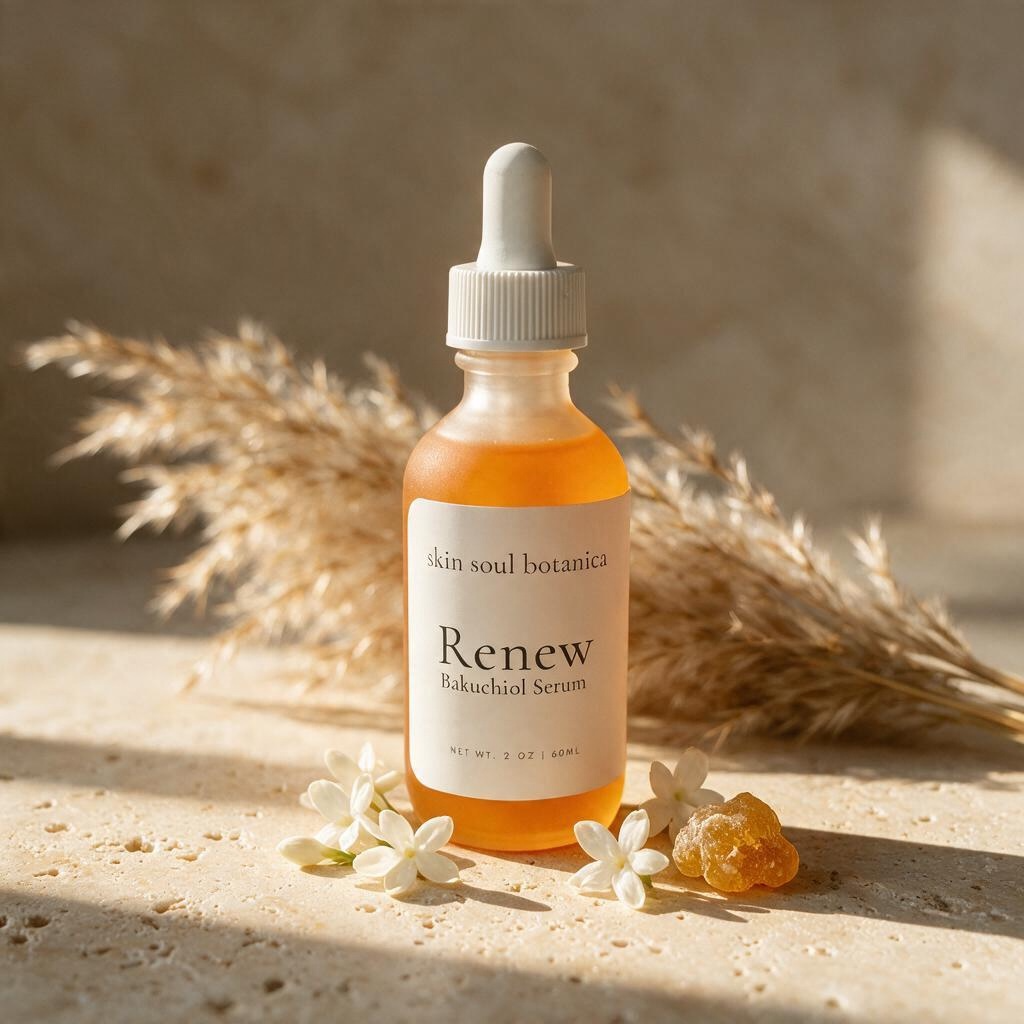
Science-backed backuchiol. Your new favorite serum.
Clinically proven bakuchiol at the gold standard 1% concentration, formulated with squalane, rosehip, sea buckthorn, frankincense, and jasmine. Renew is a deeply nourishing serum that supports collagen, brightens, and firms. If you’ve struggled with retinol or been scared to try it this will be your go-to serum. Unlike retinol there is no sun sensitivity with renew which means you can use this as your am/pm serum. This is your skin longevity serum in a bottle.
Renew: The Treatment Oil That Rebuilds Your Barrier While You Sleep
Renew isn't just a moisturizing oil, it's a barrier-repairing treatment oil.
Here's what's inside:
✨ 1% Bakuchiol - Supports ceramide production, gentle collagen stimulation, clinically proven
✨ Squalane - Mimics natural sebum, integrates into barrier
✨ Jojoba oil - Balances oil production, anti-inflammatory
✨ Rosehip oil - Omega-rich, repairs barrier damage
✨ Macadamia nut oil - Palmitoleic acid (your skin needs this!)
✨ Meadowfoam seed oil - Prevents transepidermal water loss
✨ Sea buckthorn oil - Omega-7, vitamin E, regenerates
✨ Vitamin E - Protects lipids from damage
✨ Frankincense - Anti-inflammatory, calming
✨ Jasmine - Soothing, aromatherapeutic
How to use it for barrier repair:
After cleansing with Melt (oil cleanser that protects your barrier), apply 2-3 drops of Renew to damp skin.
Press gently, don't rub.
Let it absorb. Your skin will drink it in.
Use morning and evening.
Timeline for barrier repair:
Week 1: Skin feels softer, less tight. Redness starts to calm.
Week 2-3: Sensitivity decreases. Products that used to sting are now tolerable. Hydration improves.
Week 4-6: Barrier is significantly repaired. Skin looks healthier, feels comfortable, reacts much less.
The Complete Barrier Repair Routine (Keep It Simple)
When your barrier is compromised, simplicity is key.
Now is NOT the time for actives, exfoliants, or complicated routines.
Morning:
Cleanse: Melt (oil cleanser nourishes while cleansing, protects barrier)
Hydrate: Dew (rose hydrosol mist, gentle hydration)
Treat: Renew (barrier-repairing treatment oil)
Repair: Restore (barrier repair moisturizer)
Protect: SPF 30+ (mineral sunscreen is gentler)
Evening: Same routine (skip SPF)
That's it. 4-5 steps. Keep it gentle. Let your barrier heal.
Common Questions About Facial Oils for Barrier Repair
Q: Will facial oil make me break out if my barrier is damaged?
A: Not if you use the right oils! Non-comedogenic oils like jojoba and squalane actually help BALANCE your skin.
When your barrier is damaged, your skin often overproduces oil to compensate. The right facial oil can actually calm that down.
Q: How long does barrier repair take?
A: Most people see significant improvement in 2-4 weeks with consistent use of barrier-supporting oils.
Severe damage may take 6-8 weeks. Be patient—you're rebuilding at a cellular level.
Q: Can I use facial oil if my skin is oily?
A: YES! Oily skin can still have a compromised barrier.
Jojoba oil (in Renew) mimics your natural sebum and can actually signal your skin to produce LESS oil.
Q: Why does my skin feel tight after washing?
A: Your cleanser is stripping your barrier. Switch to oil cleansing (like Melt) immediately.
That tight feeling is your barrier crying for help.
The Clinical Evidence: Oil Works for Barrier Repair
Let me share some actual science:
Study #1: Sunflower Seed Oil for Barrier Function
Published in Pediatric Dermatology, 2008
Researchers tested sunflower seed oil on compromised skin barriers.
Results: Sunflower oil significantly improved barrier function, reduced TEWL, and didn't increase infection risk.
Conclusion: High-linoleic acid plant oils support barrier repair.
Study #2: Bakuchiol and Ceramide Production
Published in British Journal of Dermatology, 2018
Researchers tested bakuchiol's effect on barrier lipids.
Results: Bakuchiol increased ceramide synthesis in skin cells.
Conclusion: Bakuchiol supports barrier repair from within.
Study #3: Fatty Acids and Barrier Integrity
Published in Journal of Clinical and Aesthetic Dermatology, 2012
Researchers studied topical fatty acids for barrier function.
Results: Omega-6 and omega-9 fatty acids restored lipid matrix and improved barrier integrity.
Conclusion: Topical oils with essential fatty acids are effective for barrier repair.
Translation: The science backs this up. Oils work.
Your Barrier Deserves Better Than Harsh Cleansing
If there's one thing I want you to take away from this, it's this:
You can't repair your barrier if you're damaging it every time you wash your face.
Harsh foaming cleansers strip your natural lipids. Every. Single. Time.
Oil cleansing protects your barrier while you cleanse.
Treatment oils rebuild it after.
Together, they're the most effective strategy for barrier repair.
Not complicated. Not expensive. Just smart, gentle, effective.
Ready to Heal Your Barrier?
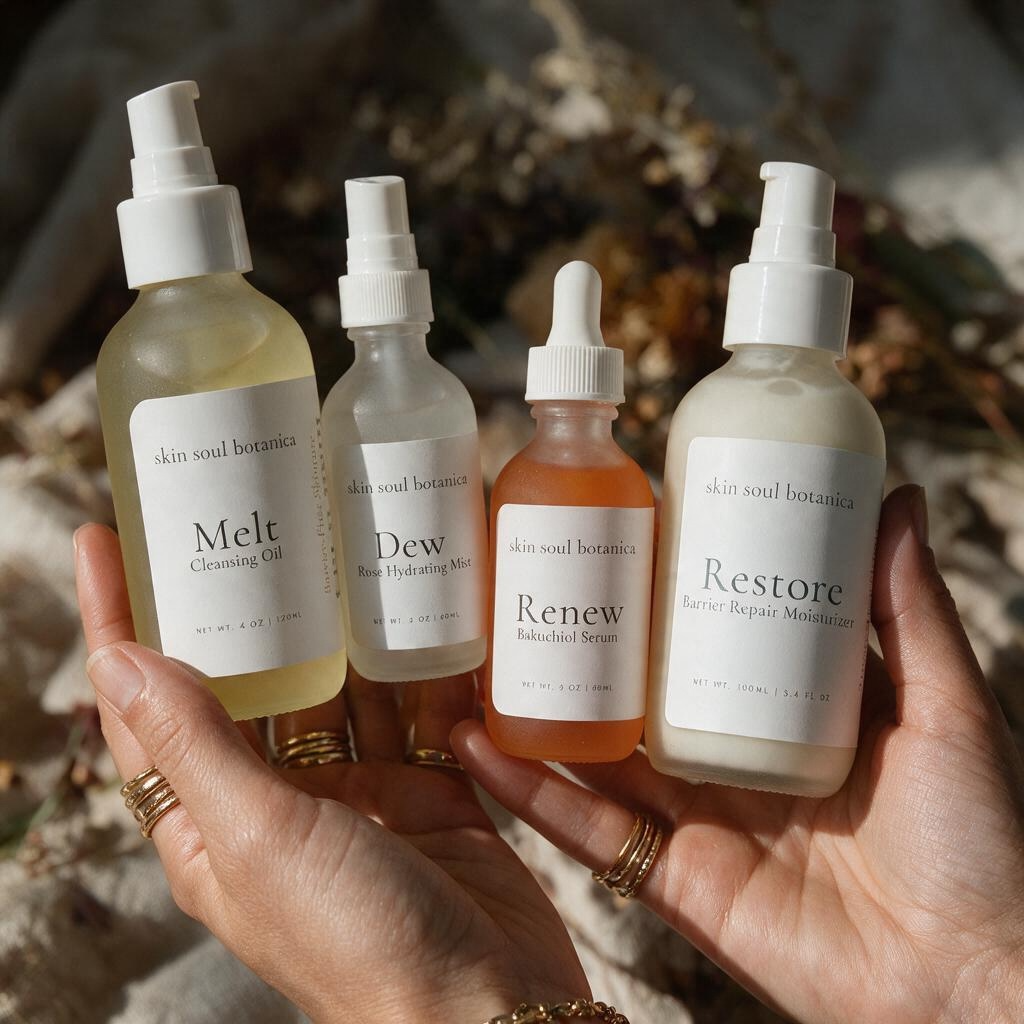
Four products. One complete barrier-first ritual.
Everything you need to cleanse, hydrate, treat, and protect in the right formulas, in the right order, working together the way they were designed to. This is the ritual we would build for every client who comes to us not knowing where to start.
Melt Oil Cleanser - Cleanses deeply without stripping (macadamia, meadowfoam, sunflower, vitamin E)
Renew Treatment Oil - Rebuilds your barrier while nourishing (6 omega-rich oils + bakuchiol + vitamin E)
Use them together. Keep it simple. Let your barrier heal.
Your skin will feel comfortable again. Soft. Balanced. Resilient.
Shop:skinsoulbotanica.com
Follow:@skinsoulbotanica
Want weekly barrier-health tips, ingredient breakdowns, and gentle skincare rituals?
Join my email list for science-backed guidance on healing and protecting your skin barrier—naturally.